Redesigning Budget Development as Executive Decision Infrastructure
The City Manager tapped me to redesign Gainesville's entire budget development process: fiscal retreat, Commission workshops, adopted plan. The result was a structured communication system that connected strategy, operations, and resource decisions across 23 departments and a $467M budget, built while the city was absorbing the most significant revenue disruption in its recent history.
The Challenge
Budget development in a mid-size city is one of the most complex recurring deliverables in public management. It touches every department, every revenue source, every policy priority, and every public commitment the organization makes. When it works well, it gives elected officials, executive leadership, and the public a clear line of sight from strategy to services to dollars. When it doesn't, it becomes a compliance exercise: technically complete but functionally useless as a decision-making tool.
In Gainesville, the budget function had recently been reorganized into the newly established Office of Management & Budget, a unit the city's own adopted plan would later describe as still staffing up and still building its internal processes. The existing workshop materials were data-heavy but lacked narrative structure: tables without context, numbers without a strategic through-line. The adopted budget book needed to evolve from a traditional finance document into something that helped multiple audiences understand how priorities, operations, and resources fit together.
As Executive Chief of Staff, the budget wasn't technically my function. I saw a gap between the complexity of what the organization was navigating, including significant financial challenges, and the tools leadership had to make sense of it. I stepped in to redesign both the process and the product, building a system that could translate a $467 million, 23-department budget into something people at every level of financial literacy could use to make better decisions.
The Approach
The workshop system
I designed a structured presentation format for Commission budget workshops that replaced the prior approach, which was largely spreadsheet slides with minimal narrative framing. The new template gave every department a consistent structure:
- Core services
- Strategic connection
- Multi-year budget trends with actuals and year-over-year change analysis
- Position levels
- A plain-language program and service impacts section explaining what the numbers meant for service delivery
Every workshop opened with a visual budget development timeline so the Commission always knew where they were in the process and what was ahead.
This format carried across the full budget cycle: a fiscal retreat in March to set strategic context and financial parameters, department-by-department workshops in May and June, an all-funds update in August, and two statutorily required public hearings in September. Each presentation built on the last. Supporting analytical memoranda provided detailed revenue modeling, fund balance analysis, and budget gap scenarios with explicit decision levers and dollar amounts. The Commission wasn't just receiving information, they were evaluating tradeoffs.
The Adopted Plan
I then carried the same design logic into the adopted Financial and Operating Plan (a 400+ page document that serves as the city's definitive record of its budget), with one caveat: this time the design had to work for multiple audiences at once. A Commissioner needs strategic context and tradeoff framing. A department head needs to see their budget in relation to the whole. A resident picking up the adopted plan needs a way in that doesn't require a finance degree. The prior materials treated all of these audiences the same. I rebuilt the architecture from scratch so each audience could engage at their level:
The work product, in full.
Three years of adopted Financial and Operating Plans, each one building on the prior year's foundation. Every workshop presentation, supporting memorandum, and public hearing document is part of the public record.
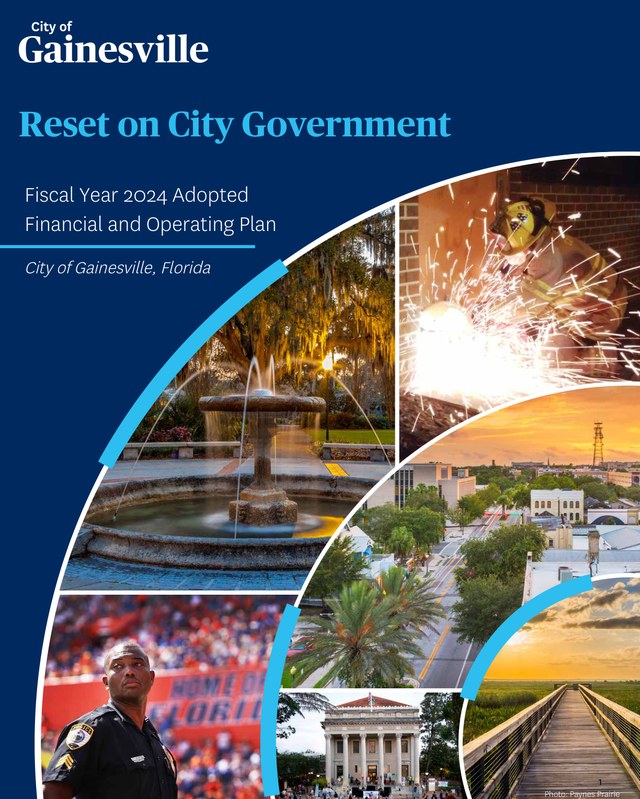 FY 2024 Adopted Financial and Operating Plan
PDF · City of Gainesville
FY 2024 Adopted Financial and Operating Plan
PDF · City of Gainesville
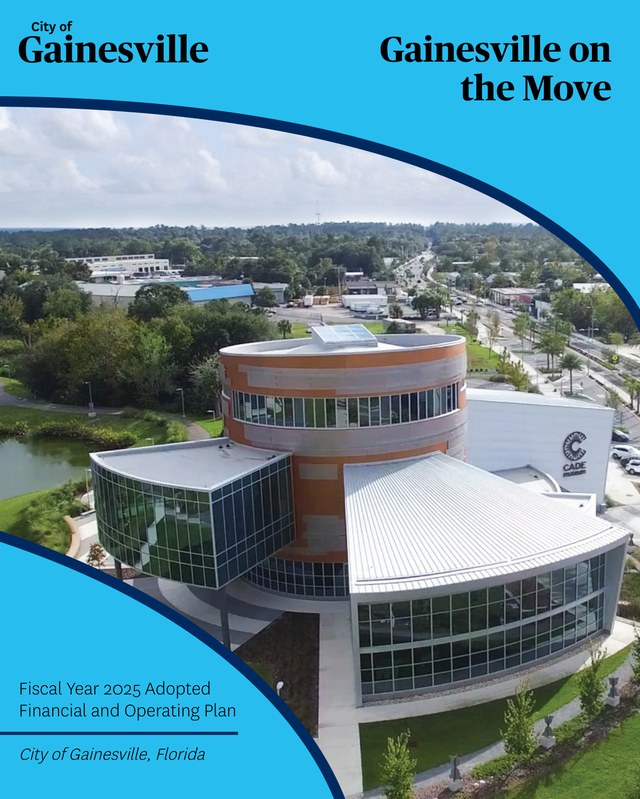 FY 2025 Adopted Financial and Operating Plan
PDF · City of Gainesville
FY 2025 Adopted Financial and Operating Plan
PDF · City of Gainesville
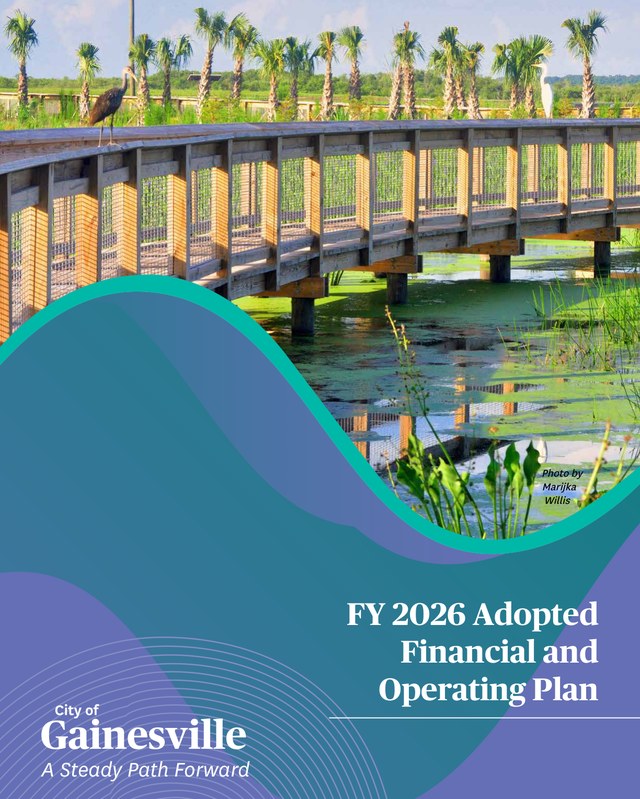 FY 2026 Adopted Financial and Operating Plan
PDF · City of Gainesville
FY 2026 Adopted Financial and Operating Plan
PDF · City of Gainesville
FY 2026 Budget Development Cycle
Commission meetings, workshops, and public hearings, all publicly archived.
Prior budget development materials, including the FY2020–2021 adopted budget book and workshop presentations, are also available through the City's public meeting archives.
"Thank you especially to Executive Chief of Staff Cintya Ramos and the Budget Development Team for their assistance in preparation of this plan."
Cynthia W. Curry, City Manager · FY 2026 Budget Message
Three years of budget development, redesigned from the ground up.
The leadership capabilities behind the outcome.
The budget wasn't my function. It was housed in a newly established office still building capacity. The City Manager brought me in as Executive Chief of Staff because the deliverable demanded someone who could integrate finance, operations, strategy, and communication — then drive it to completion. The City Manager's budget message credits me by name. The adopted plan's Budget Development Team is listed as me and one budget analyst.
The budget book was the capstone, not the whole story. I restructured how budget information moved through the organization across the full cycle: from fiscal retreat to department workshops to public hearings to adopted plan. Each stage built on the last using a consistent framework, so by adoption, leadership had worked with the same structure for months. The prior approach was disconnected presentations with no narrative thread between them.
The same 400-page document had to serve people with different needs and levels of financial literacy. I designed a layered architecture (from a plain-language Neighbor's Guide through executive summaries through full financial detail) so each reader could find their entry point without the document losing rigor for anyone else. The result was a budget book built to be used, not just published.
A successful first year is a project. Three consecutive years, each refining the format and earning a GFOA Distinguished Budget Presentation Award, is an institutional standard. The templates and architecture I built became the organization's operating model for how the budget is developed, communicated, and adopted.
This is what financial leadership looks like when it's built for decisions, not compliance.
The budget development redesign reflects the same operating discipline I bring to every complex institutional challenge: understand the audience, design the system, build for clarity, and leave something durable behind.