Reintroducing a Signature Civic Event Through Cross-Functional Execution
Designated by the City Manager as lead coordinator, I built the operating model and execution framework to bring back a citywide holiday parade after 30 years, and scaled it into a recurring civic institution over three years. Grand marshals ran from Coach Steve Spurrier to Shaquille O'Neal to Apollo Theater honorees.
The Challenge
In September 2023, the Gainesville City Commission voted to bring back the city's holiday parade, the first in more than 30 years. The parade date was set for December 2, giving the organization less than three months to stand up a full event from scratch.
There was no existing infrastructure, no institutional memory, and no dedicated funding. The fiscal year budget had already been adopted without a parade line item, meaning every dollar would need to come from external sponsorships and in-kind support. Initial estimates pegged the cost at nearly $78,000.
This was a high-visibility initiative with direct Commission interest, broad community expectations, and no margin for a quiet failure. The challenge was not just delivering a successful event. It was building an operating model durable enough to sustain and scale beyond the first year.
The Approach
As lead coordinator, I organized the initiative across seven integrated workstreams: sponsorship development, community partnerships, participant recruitment, communications, volunteer coordination, logistics, and event-day operations. Each required its own stakeholder engagement, delivery milestones, and accountability structure.
With no budget, the financial model had to be built externally. I structured a partnership with the Greater Gainesville Chamber of Commerce to serve as fiscal agent, using their 501(c)(3) status to drive tax-deductible sponsorship giving. A tiered sponsorship framework (Platinum $10,000, Gold $5,000, Silver $2,500, Sapphire $1,500) brought in 35 sponsors, generating $99,400 in total support: $68,775 in cash donations and $30,625 in-kind.
Community partnerships with the University of Florida, Santa Fe College, and Alachua County Public Schools anchored participant recruitment, while coordination with nonprofits, faith-based organizations, and civic clubs produced both parade units and volunteer capacity. Internal teams across 10+ city departments (GPD, Fire Rescue, Public Works, Parks & Recreation, Communications, Procurement) handled route logistics, event-day execution, signage, program booklets, a dignitary brunch, live broadcast, and media coordination.
After a successful inaugural year, I led an after-action process to identify improvements and continued as lead coordinator, refining the delivery model year over year. Year 2 scaled to 110+ parade units with Shaquille O'Neal as grand marshal. By Year 3, the parade had become a platform for something deeper. The selection of Marion J. Caffey and Emmanuel Garilus as co-grand marshals connected the event to the city's One Nation One Project (ONOP GNV) initiative, a $650,000 ARPA-funded program to reduce youth gun violence through arts and culture. Garilus, who emerged from that program to win the Apollo Theater's grand prize, returned as grand marshal, closing a loop from community investment to national recognition and back.
From concept to community tradition.
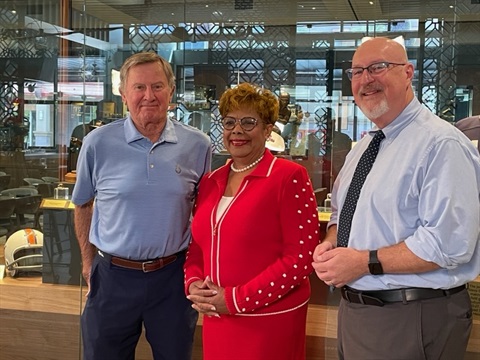
University of Florida Head Football Coach and Heisman Trophy winner. Anchored the parade's inaugural year with local institutional credibility.
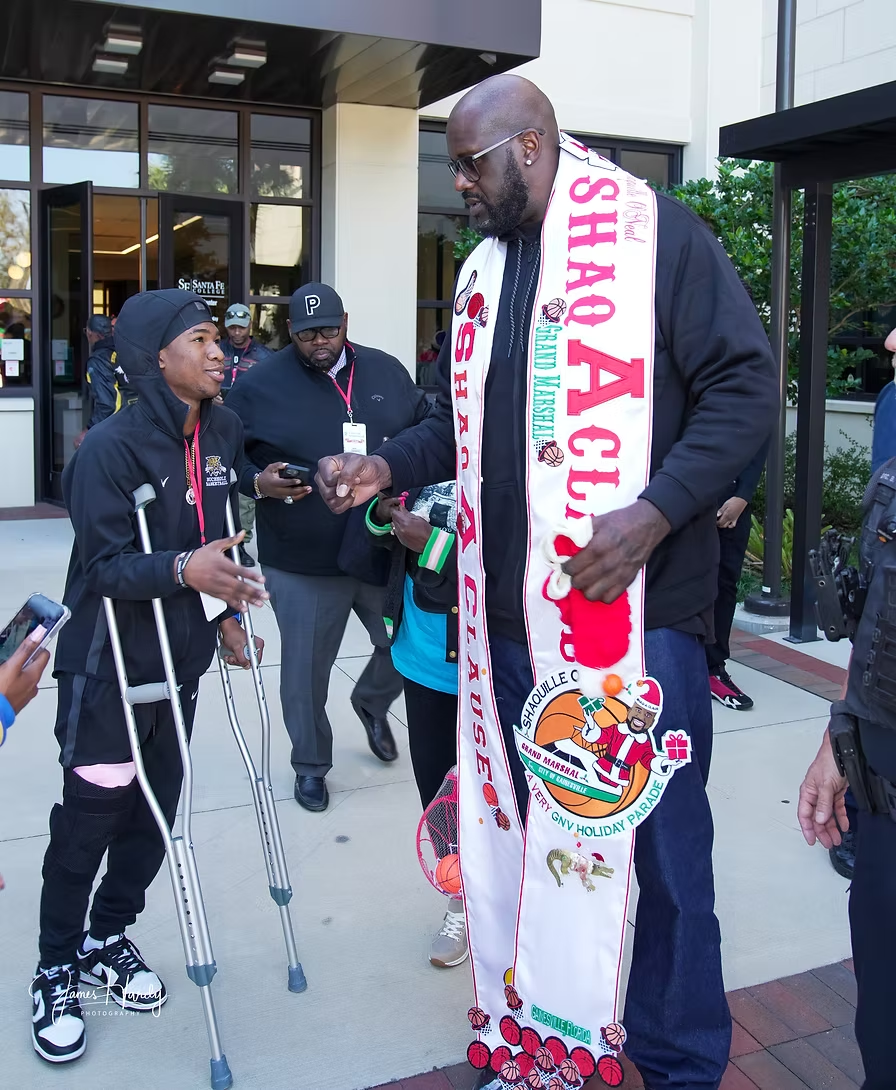
NBA legend and global icon. Signaled the parade's rapid growth from local revival to nationally recognized civic event.
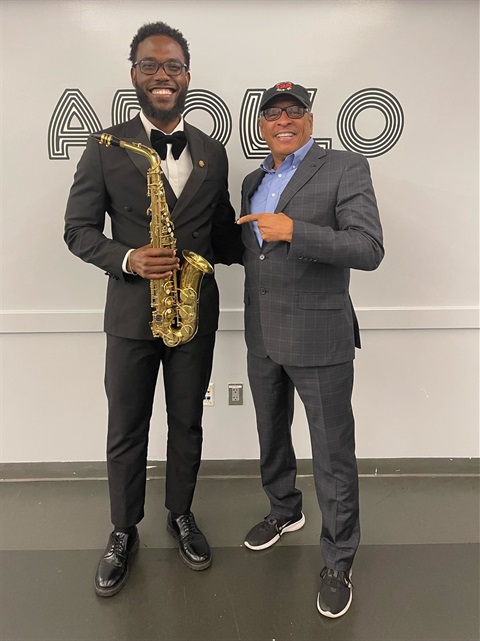
Apollo Theater producer and grand prize winner. Gainesville natives whose selection connected the parade to the city's ONOP GNV arts initiative and closed a loop from community investment to national recognition.
The parade in motion.
Results across three years of execution.
The leadership capabilities behind the outcome.
With no dedicated funding and a $78K cost estimate, I built the financial model externally: structured a fiscal agency partnership, designed a four-tier sponsorship framework, and secured $99,400 in support from 35 sponsors. Every dollar was raised, not allocated.
Seven workstreams, 10+ city departments, major institutional partners, dozens of community organizations, and a hard public deadline, all coordinated under a sub-three-month timeline with no prior operating model to build on.
A successful first year is a project. Three years of growth, from Spurrier to Shaq to Apollo Theater honorees, from 93 to 105+ units, from experiment to a platform connecting city investment in youth arts to national recognition. That is what turns a project into an institution.
This is what cross-functional execution looks like when the stakes are public.
The holiday parade reflects the same operating discipline I bring to every public, multi-stakeholder challenge: build the structure, align the teams, execute with rigor, and leave something that lasts.